What Is a Sewage Treatment Plant (STP)? A Practical Guide for Hotels, Hospitals and Housing Societies
💡 At a Glance
- A sewage treatment plant (STP) purifies domestic blackwater and greywater on-site for immediate flushing, gardening, and cooling tower reuse.
- Hotels, hospitals, and housing societies typically select Moving Bed Biofilm Reactor (MBBR) systems for compact basements and shock load tolerance.
- Proper tank sizing, steady aeration, and scheduled preventative maintenance prevent odors and ensure smooth environmental compliance.
Table of Contents
- 1. What Is a Sewage Treatment Plant (STP), in Plain Words?
- 2. Who Needs an STP Plant on Their Premises?
- 3. How an STP Works: Stage-by-Stage Walkthrough
- 4. Common STP Technologies: MBBR, SBR, and MBR
- 5. Where Treated Water Can Be Reused Safely
- 6. Common STP Field Mistakes We See in the Field
- 7. How Vivid H2O Designs and Installs STPs
- 8. Frequently Asked Questions About STP Plants
- 9. Plan Your Sewage Treatment Plant with Experienced Engineers
What Is a Sewage Treatment Plant (STP), in Plain Words?
Every occupied building generates domestic sewage through daily plumbing: blackwater from toilets and greywater from sinks, showers, and laundry. A sewage treatment plant is an on-site facility that purifies this wastewater through coordinated biological and physical stages.
Facility owners often confuse an STP with an Effluent Treatment Plant (ETP). While an ETP treats chemical-heavy industrial process wastewater, an STP handles organic-rich domestic sewage. Because domestic sewage consists mostly of biodegradable organic matter and common pathogens, it responds reliably to biological digestion.
Rather than discharging into septic pits or overloaded municipal drains, an on-site sewage treatment plant converts wastewater into clean, non-potable water ready for immediate utility reuse right where it was produced.
Who Needs an STP Plant on Their Premises?
In developing corridors across Madhya Pradesh and neighboring states, municipal sewer lines often lag behind commercial construction. Facilities must therefore treat wastewater on site.
Whether a facility requires an STP plant depends on regulations set by local authorities and state pollution control boards, typically based on built-up area thresholds, daily water consumption, or occupant load. Common establishments that benefit include:
- Hotels and Resorts: Hospitality venues face sharp water swings. A 40-room hotel may have quiet weekday mornings followed by weekend banquet surges. An on-site STP buffers these spikes and provides steady irrigation water for lawns and landscaping.
- Hospitals and Healthcare Facilities: Medical campuses consume high water volumes across wards and laundries. STP for hospitals requires dependable biological treatment and thorough disinfection before utility reuse, supporting strict facility hygiene.
- Residential Housing Societies: A mid-size housing society housing hundreds of residents generates predictable morning and evening sewage peaks. Recycling treated water into toilet flushing lines directly lowers fresh tanker purchases.
- Schools and Commercial Complexes: Educational campuses and multi-tenant office complexes generate steady greywater streams, producing high-quality utility water for cooling towers and athletic grounds.
How an STP Works: Stage-by-Stage Walkthrough
Wastewater treatment is a progressive purification train where each stage prepares the stream for the next. Here is how raw sewage flows through a standard commercial sewage treatment plant:
Stage 1: Preliminary Screening: Raw sewage passes through stainless steel bar screens that trap coarse debris like cloth wipes and plastics, protecting transfer pumps from mechanical jams.
Stage 2: Equalisation & Mixing: Sewage flows peak during morning hours and drop late at night. The equalisation tank buffers hydraulic variations, using coarse air diffusers to keep solids suspended and prevent septic odors.
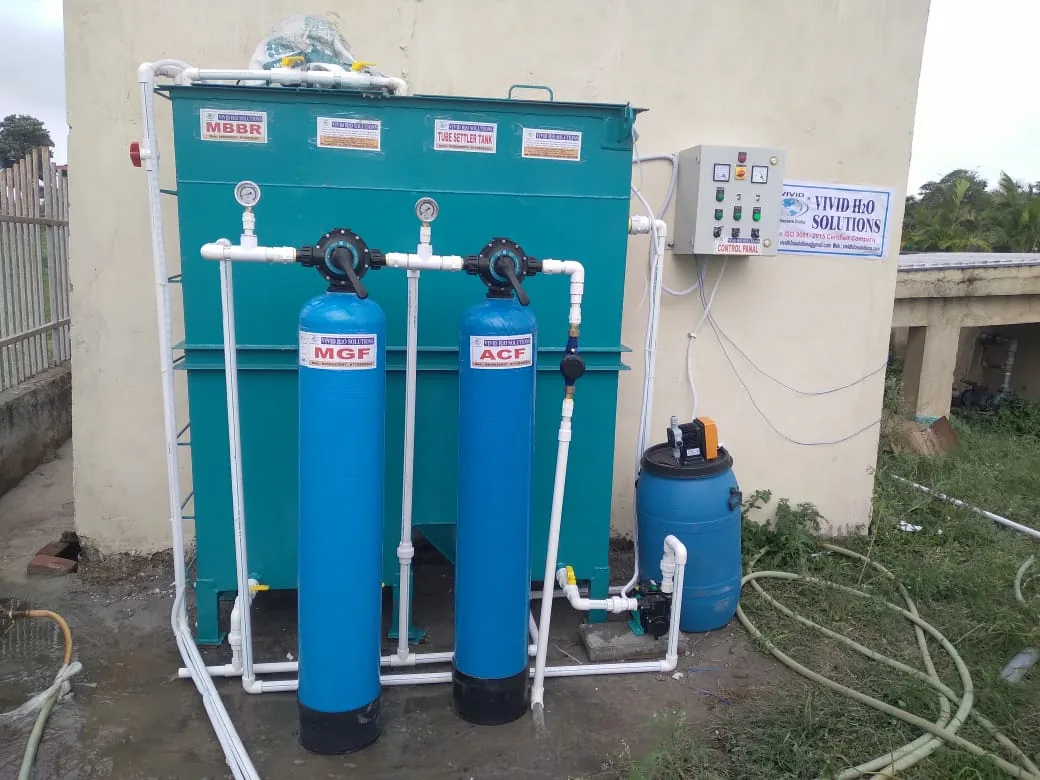
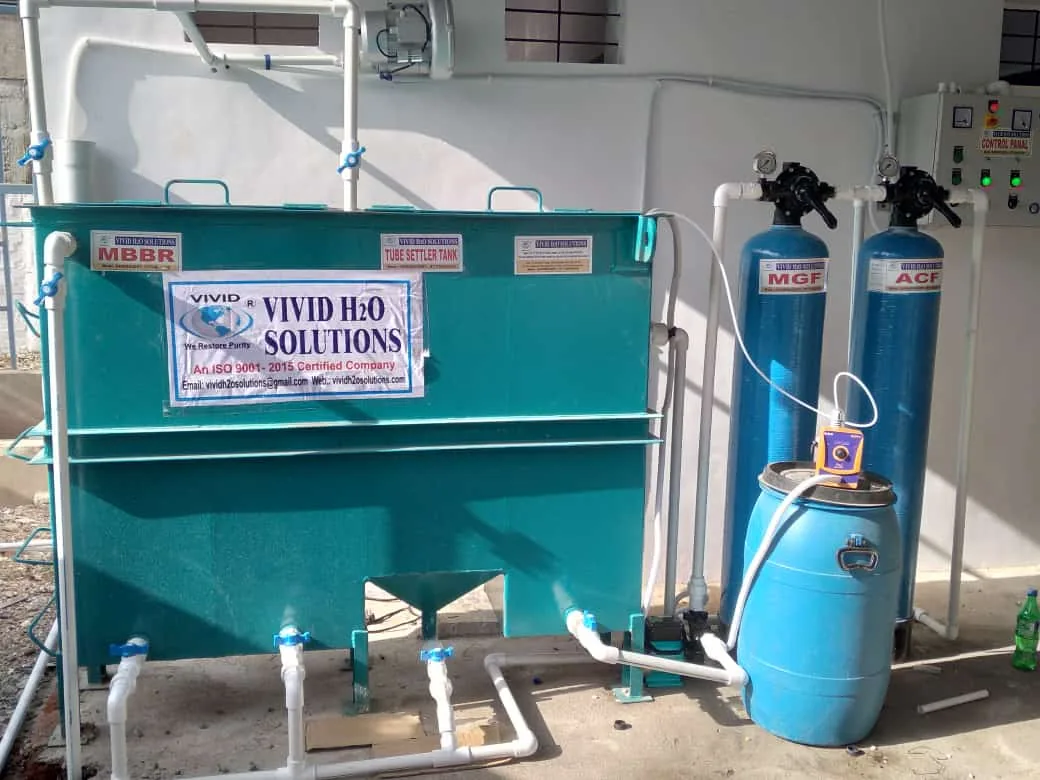
Stage 3: Biological Aeration: This is the biological heart of the plant. In an MBBR STP, millions of buoyant plastic bio-carriers circulate in an aerated tank. Aerobic bacteria grow on carrier surfaces, consuming dissolved organic matter (BOD and COD) and converting it into clean biomass.
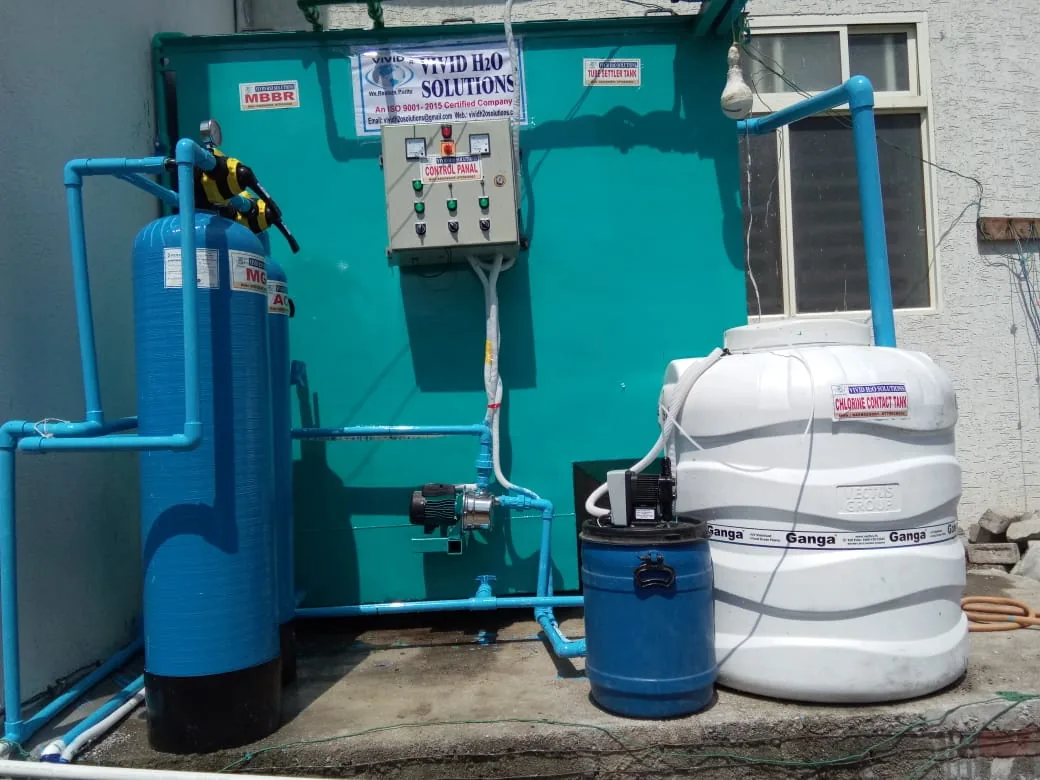
Stage 4: Secondary Clarification: Water enters a tube settler hopper where microbial flocs settle by gravity. Clarified water overflows collection weirs, while settled biological sludge is collected for periodic drying.
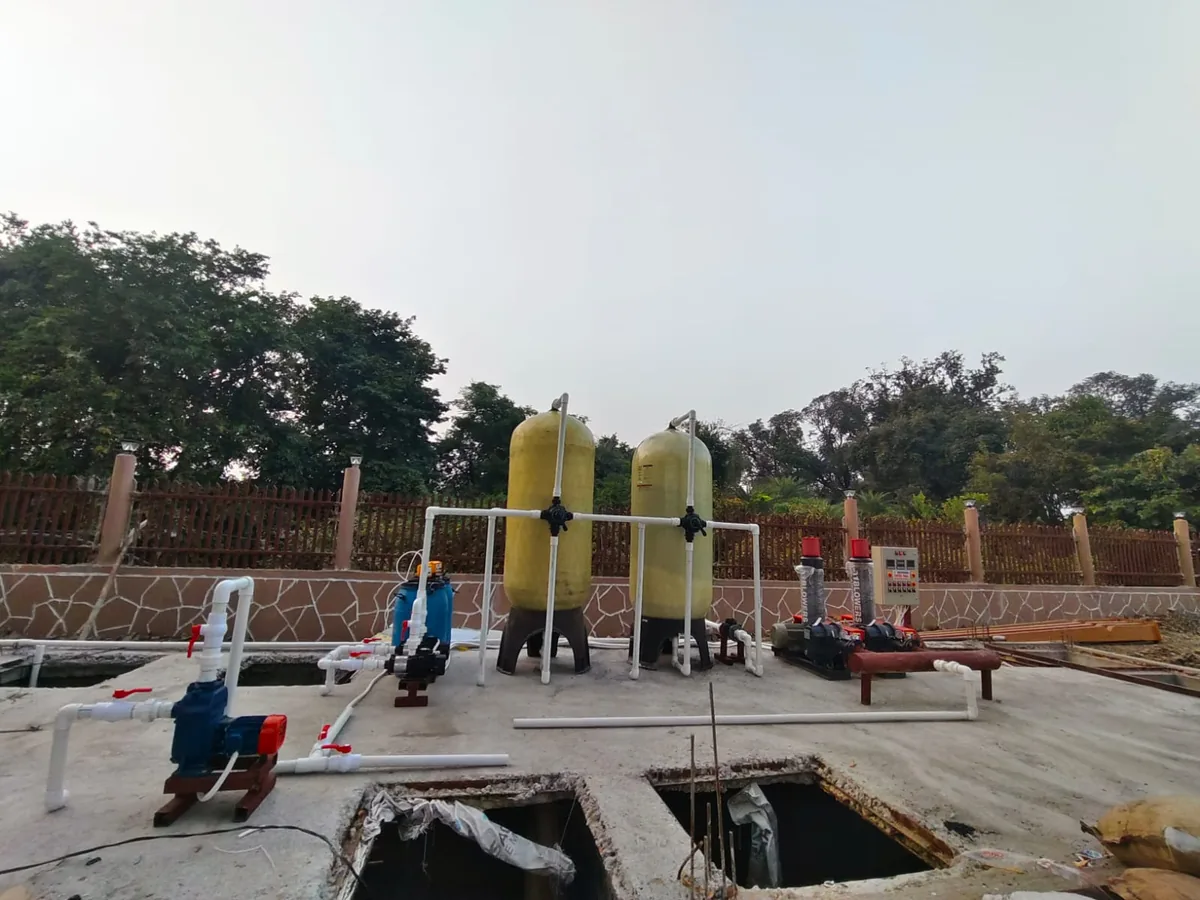
Stage 5: Dual Media Filtration: Clarified water is pumped through a Multi-Grade Filter (MGF) to remove suspended particles, followed by an Activated Carbon Filter (ACF) to eliminate trace odors and residual organics.
Stage 6: Disinfection: Polished water passes through a chlorine contact tank or ultraviolet (UV) system. Disinfection inactivates coliform bacteria, rendering treated water safe for non-potable storage and reuse.
Common STP Technologies: MBBR, SBR, and MBR
Selecting the biological treatment method determines system footprint, power demand, and maintenance routines. Three primary technologies dominate commercial installations:
1. Moving Bed Biofilm Reactor (MBBR): The most practical choice for hotels, hospitals, and housing societies. Bacteria grow on submerged plastic carriers kept moving by aeration. It handles sudden flow fluctuations easily, fits compact basements, and needs no sludge recirculation pumps.
2. Sequential Batch Reactor (SBR): An activated sludge process where filling, aeration, settling, and decanting occur in timed batches within the same tank. SBR produces high water quality but requires automated PLC timers and motorized decanters.
3. Membrane Bioreactor (MBR): Combines aeration with ultrafiltration membranes, removing the need for settling hoppers. MBR delivers very clear water in a minimal footprint, but involves higher membrane replacement expenses and specialized cleaning.
| Technology | Footprint | Operational Complexity | Shock Load Tolerance | Best Fit |
|---|---|---|---|---|
| MBBR | Compact | Low to Moderate | High (Attached Growth) | Hotels, Hospitals, Housing Societies |
| SBR | Moderate | Moderate (PLC Automated) | Moderate (Batch Cycles) | Large Townships, Campuses |
| MBR | Minimal | High (Membrane Care) | Moderate | Space-Constrained Urban Basements |
Where Treated Water Can Be Reused Safely
Treating wastewater only to discard it into a drain wastes substantial utility value. When engineered to meet non-potable reuse standards, treated water replaces fresh water intake across four primary applications:
- Toilet Flushing: Dual-plumbing networks in residential townships and commercial towers direct treated, disinfected water into flush tanks, cutting municipal water demand immediately.
- Landscaping and Gardening: Treated water carries mild trace nutrients that keep hotel lawns, residential gardens, and perimeter greenbelts hydrated without fresh water consumption.
- HVAC Cooling Tower Makeup: Central chillers in hospitals and shopping centers evaporate thousands of liters daily. Properly filtered tertiary-treated water serves as dependable cooling tower makeup.
- Driveway Washing and Dust Control: Basement parking lots, exterior service lanes, and wash bays can be cleaned using pressurized treated water without expending potable supplies.
Common STP Field Mistakes We See in the Field
Over years of commissioning wastewater systems, our engineers have noted several preventable operational pitfalls. Here are practical field lessons to keep in mind:
Undersized Equalisation Tanks: Sizing equalisation basins only on average daily flow rather than peak surge capacity creates problems. When morning shower demands spike, undersized tanks overflow or flood biological reactors with unbuffered sewage.
Poor Aeration Planning: Aerobic bacteria require steady dissolved oxygen. Inadequate blower capacity or poorly positioned diffusers create dead zones, producing septic odors that disturb guests and residents.
Skipping Kitchen Grease Traps: Commercial kitchens produce cooking oils that solidify as they cool. Without regular grease trap cleaning, oil coats bio-carriers, suffocating active bacteria and impairing treatment.
Skipping Maintenance and Backwashing: Sand and carbon filters need regular backwashing to dislodge trapped particles. Allowing chlorine dosing tanks to run empty permits coliform bacteria to regrow in holding tanks.
Lack of Operator Training: Even automated systems require trained personnel to inspect air blowers, verify dissolved oxygen, and replenish chemical tanks. Basic operator diligence keeps the plant stable year-round.
How Vivid H2O Designs and Installs STPs
At Vivid H2O Solutions, our engineering approach emphasizes dependable, quiet, and user-friendly wastewater systems. With 9+ years of experience and 300+ completed projects across Madhya Pradesh and neighboring states, we provide comprehensive turnkey support:
Detailed Site Assessment: We evaluate plumbing levels, expected peak occupancy, and available space before creating design layouts, offering either civil concrete structures or compact prefabricated modular skids.
Robust Manufacturing: Our packaged plants use corrosion-resistant epoxy-coated mild steel or heavy-duty FRP tanks equipped with fine-bubble diffusers, virgin-grade bio-carriers, and low-noise air blowers.
Skilled Commissioning: Our field engineers oversee piping tie-ins, electrical panel integration, and biological seeding until the plant achieves stable daily operation.
Annual Maintenance Contracts (AMC): We support installations with regular preventative maintenance visits, chemical replenishment, and rapid on-site technical assistance across Bhopal and regional industrial centers.
Frequently Asked Questions About STP Plants
Here are practical answers to common questions facility managers ask when planning an STP installation:
What size sewage treatment plant (STP) do we need?
Plant sizing depends on your daily occupant count, facility type, and water usage patterns. Hotels calculate wastewater based on room count, kitchen volume, and laundry loads, whereas residential societies size systems using apartment counts and average per-capita daily consumption.
How often is STP plant maintenance needed?
Basic checks like monitoring blower pressure, cleaning intake screens, and checking dosing levels should occur daily. Comprehensive servicing, filter backwashing, and biological health evaluations typically happen on a monthly and quarterly preventative schedule.
Can treated water from an STP be reused for drinking?
No. Standard commercial and residential STPs produce non-potable water intended for toilet flushing, garden irrigation, cooling tower makeup, and floor washing. It is not designed for drinking, cooking, or bathing.
What is the difference between an STP and an ETP?
An STP (Sewage Treatment Plant) treats domestic wastewater from toilets and washrooms rich in organic matter. An ETP (Effluent Treatment Plant) treats industrial wastewater containing chemicals, oils, and heavy metals from manufacturing processes.
How long does a complete STP installation take?
Installation timelines depend on plant capacity and site readiness. Prefabricated modular skid systems assemble quickly once civil plinths and piping connections are ready, whereas underground concrete structures require extra time for civil curing and waterproofing.
Plan Your Sewage Treatment Plant with Experienced Engineers
Installing a sewage treatment plant ensures environmental compliance, cuts recurring water tanker bills, and conserves valuable water resources. Whether managing a hotel, hospital, or housing society, selecting the right process and an experienced engineering partner ensures hassle-free operation.
Vivid H2O Solutions brings complete turnkey capability—from site surveys and plant fabrication to commissioning and long-term AMC servicing across Madhya Pradesh and neighboring states.
Planning an STP Installation for Your Facility?
Speak directly with our field engineers for a tailored site assessment, technology recommendation, and compliant layout design.